A walk can contain more questions than a planned activity: a leaf with a hole, a puddle that has disappeared, or a bird using the same fence post every morning. A small observation notebook offers somewhere to put those details without requiring an answer immediately. It can hold a quick sketch, a dictated sentence, a question, or a record of a place to revisit. The notebook is not a nature quiz and does not need beautiful drawings. Its value is practical: it slows a moment enough to notice what is actually there. This guide helps adults use it on ordinary, safe outings while keeping curiosity separate from collecting everything in sight.
Choose a notebook that can tolerate use
An inexpensive notebook or a few folded sheets are enough. Select paper and a binding the child can manage, with a pencil or another suitable tool. A clipboard may help if holding a small book is awkward, but avoid adding equipment that makes the walk cumbersome. Keep tools safely stored and supervised, particularly for younger children. A child who prefers speaking can dictate to an adult, and a child who uses another communication method can select symbols or photographs. There is no need for every participant to make the same kind of record. The notebook should adapt to how the child notices and communicates, rather than becoming a handwriting task attached to an outing.
Pick a familiar, accessible route
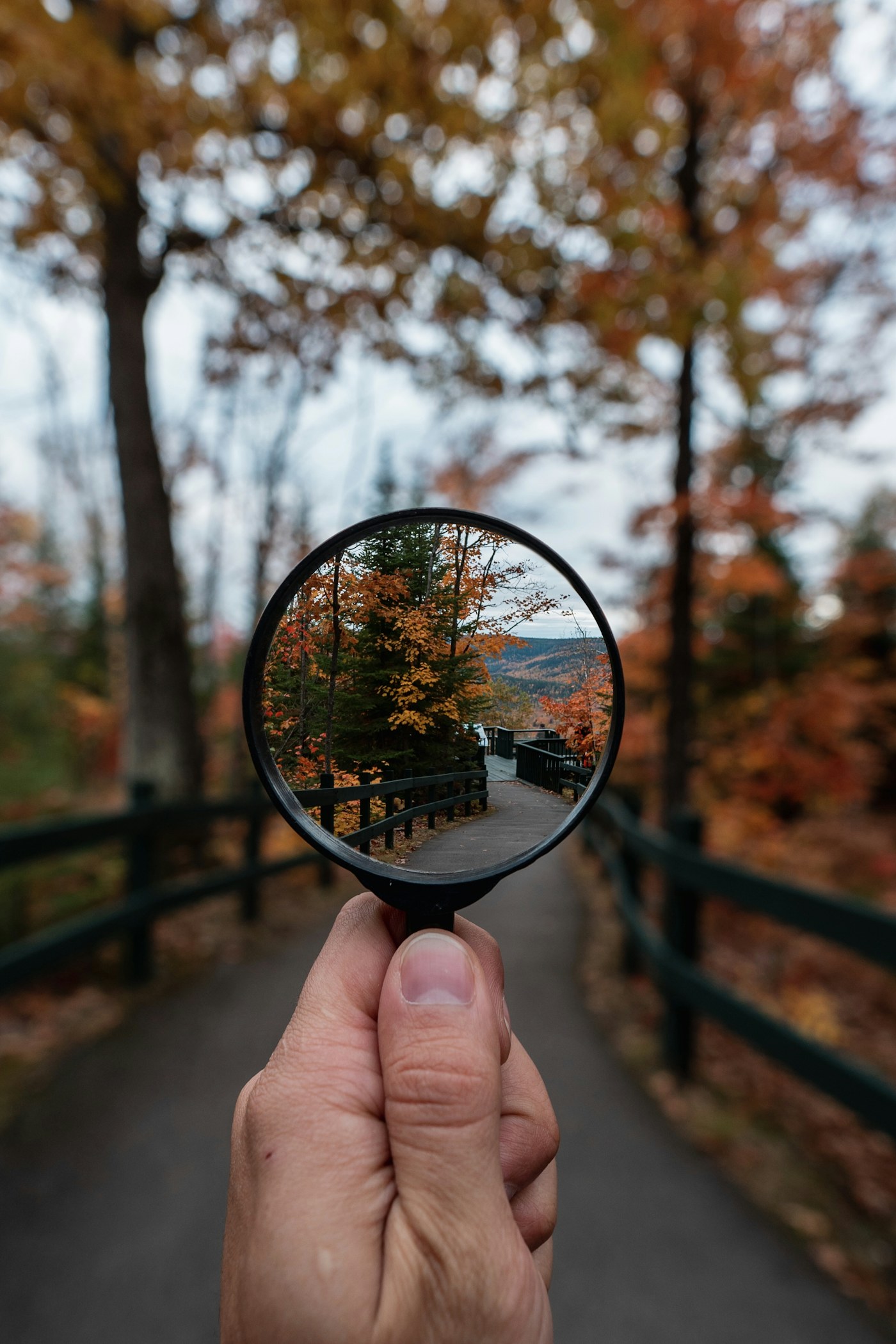
Begin somewhere you know: a local path, a courtyard, or a public garden with appropriate access. Consider weather, traffic, surfaces, boundaries, and the needs of the people coming along. Adults remain responsible for supervision and route safety. A magnifying glass can be useful when used appropriately, but do not look at the sun through optical equipment or use it to focus sunlight. Stay on permitted paths and respect local rules. An observation walk does not need a wild setting. A tree near the front door may offer more useful opportunities for revisiting than a distant destination. Familiarity makes changes easier to notice because there is a known place to compare with later.
Begin with one thing worth looking at
Ask the child what catches their attention, or offer a gentle invitation such as finding an interesting shape. Avoid a long scavenger list that makes the outing feel like a race. Spend time with one object or scene before moving on. You might notice the lines on a leaf, the pattern of stones in a wall, or the way water gathers beside a curb. Choose a position where looking is safe and does not obstruct others. If the child prefers walking to stopping, let the observation remain brief. The notebook can be used afterward. A successful outing does not depend on a certain number of entries or a completed page.
Record what is visible before explaining it
Encourage a description based on observation. “Three small holes along the edge” is different from “A caterpillar ate this leaf.” The second may be a reasonable guess, but it is still a guess unless there is supporting evidence. Use simple labels such as “I notice” and “I wonder” to keep the distinction clear. An adult can model this without making it formal: “I can see a shiny trail. I wonder what left it.” Let the child use their own words, including comparisons that make sense to them. A leaf described as “like a tiny umbrella” communicates an observed shape, even if it is not a scientific term.
Draw for attention, not artistic quality
A quick sketch can help someone look more closely. Suggest drawing one feature, such as the outline or the direction of a pattern, rather than the whole scene. Do not correct the picture into a realistic illustration. If the child wants help, draw separately and talk about what you are looking at. Written labels, arrows, or a mark showing relative size may be more useful than detailed shading. Photographs can complement a sketch, but ask before photographing people and avoid recording private information or locations unnecessarily. A camera should not remove the opportunity to look. Take the photograph, then spend a moment noticing something that might not be obvious in the image.
Use measurements only when they serve a question
Comparing two leaves or noting the rough size of a puddle can be interesting, but not every observation needs numbers. Use safe, appropriate methods and avoid disturbing wildlife or plants to obtain a measurement. A child can compare an object with their own drawing or describe one branch as longer than another. If you use a ruler, record the unit and what was actually measured. Do not pretend a rough estimate is precise. It is fine to write “about” or “could not measure from the path.” The notebook becomes more useful when it preserves the limits of the observation, including things you could not see clearly or did not have permission to approach.
Leave living things where they are
Observe animals from a respectful distance, avoid disturbing nests or shelters, and do not feed wildlife unless a site explicitly provides an appropriate supervised activity. Leave plants and natural objects in place where rules or conservation needs require it. Do not taste unknown plants or fungi. An adult should assess any handling and help with hygiene afterward. A drawing or description often serves the notebook better than a collected object that later dries out in a pocket. If the child wants to keep something, discuss whether it is permitted and necessary. “We can remember it without taking it” is a practical principle, especially in places many families visit.
Return to a question with suitable sources
Back at home or the library, choose one question to investigate if interest remains. Use a relevant field guide, a trustworthy local organization, or another suitable primary source. Identification from a photograph can be uncertain, so avoid presenting a guess as a confirmed species. An adult can say, “This looks similar, but we do not have enough detail.” Write a possible answer beside the original question, noting where it came from. You do not need to resolve every entry. Some questions may require repeated observation, expert knowledge, or information you cannot obtain safely. Leaving a question open is more honest than supplying a confident answer simply to finish the activity.
An entry that keeps uncertainty visible
A page might read, “Tuesday: the leaf beside the gate has three holes and a shiny mark.” Beneath it, the child could add, “I wonder what made the holes.” If a later book suggests one possible explanation, record that separately rather than rewriting the original note as a confirmed answer. The distinction makes the notebook useful when you return. You may find a different clue or discover that the first guess was too simple. Even a rough drawing can help identify which leaf feature you meant. This is a record of noticing over time, so it can contain corrections without the earlier entry becoming a failure.
Revisit one place and notice the difference
A later walk can return to the same tree, wall, or view. Compare the records without demanding that the child find a dramatic change. The puddle may be gone, the light different, or the scene much the same. Add the date and a brief note about conditions if that helps the comparison. Over time, the notebook can become a record of a familiar place rather than a collection of impressive facts. Let the child decide which pages matter and whether to continue. The most useful habit is modest and repeatable: look carefully, describe honestly, ask a real question, and respect both the place and the limits of what you know.
Have a correction or a question? Write to the Amenkingdj team.