Here’s a simple, practical guide for building healthy eating habits in children aged 2 to 6. It’s not complicated, and it won’t stress your child out. Just follow these steps.
1. Stick to three meals and two snacks – routine matters most.
Serve meals at the same time every day. No chasing after your child with a spoon, and no eating while playing.
Keep each meal to about 20–30 minutes. When time’s up, clear the table.
Between meals, offer only water – no snacks, no sugary drinks.
Stop all food at least one hour before bedtime.
2. Keep the eating environment simple.
Turn off the TV, put away toys and phones during meals.
Sit down and eat with your child. No scrolling, no rushing, no nagging.
Let your child feed themselves. It’s fine if they’re slow or messy – that’s how they learn.
3. Offer a variety of light, balanced foods – low on salt and sugar.
Every meal should include: grains + vegetables + protein (meat, eggs, or dairy).
Go for: leafy greens, pumpkin, carrots, potatoes, fish, lean meat, eggs, and milk.
Limit: fried foods, sweet drinks, candy, chips, and takeout.
Keep flavors mild and lightly seasoned – don’t go heavy on salt or spices.
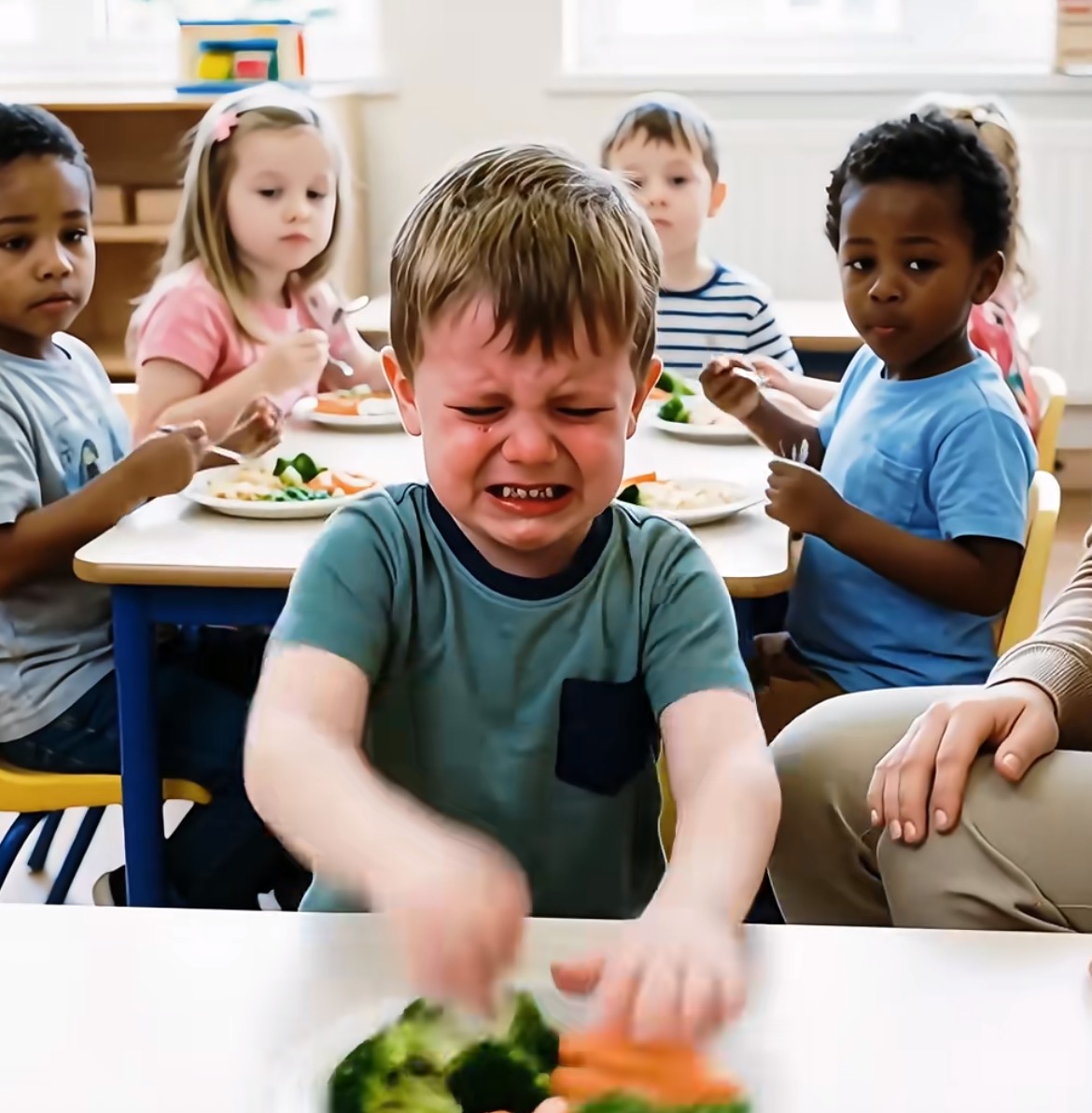
4. No force, no bribery, no food rewards.
Don’t spoon-feed against their will, don’t force them to eat, and don’t scold them for being picky.
Never use “finish your meal and you’ll get candy or cartoons” as a reward.
When your child says they’re full, stop right there. Don’t push extra bites.
5. Get them involved – they’ll be more willing to eat.
Let your child hold their own spoon and carry their own bowl.
Simple tasks work well: washing veggies, setting out chopsticks or bowls.
Kids are usually more open to trying a dish they helped prepare.
6. Lead by example – parents are the first role models.
Don’t be picky or fussy about food in front of your child.
Never say things like “this doesn’t taste good” when they’re listening.
Eat your meals on time, and your child will naturally follow suit.
7. Build good water-drinking habits from an early age.
Plain water should be the main drink.
Cut back or avoid: fruit juice, milk tea, cola, sweetened milk.
Don’t let them drink too much water half an hour before a meal – it fills up their tummy and spoils their appetite.
Have a correction or a question? Write to the Amenkingdj team.