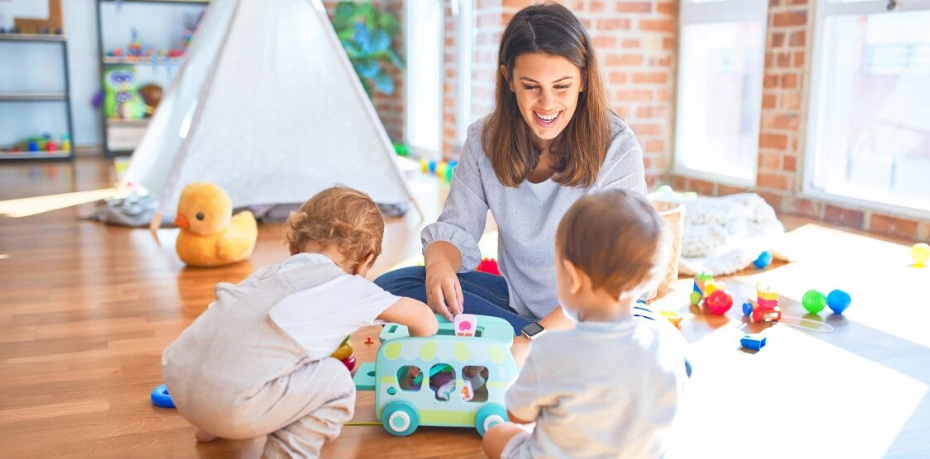
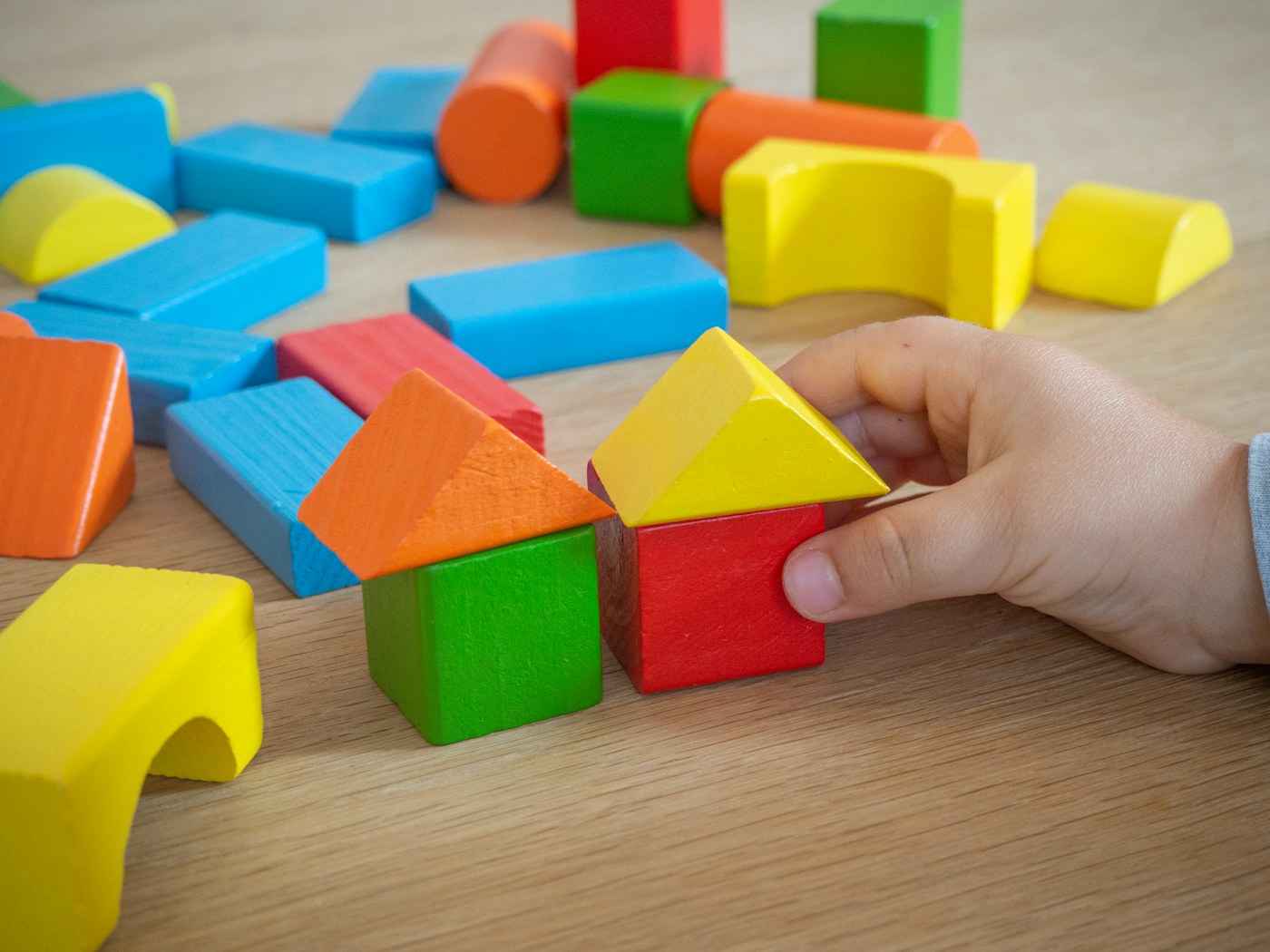
Two children are building a town. A third approaches, picks up a tower, and is immediately told to go away. From one viewpoint, the newcomer tried to join. From another, someone dismantled an important part of the game. Shared play often becomes difficult at these ordinary points of misunderstanding. Adults can help by making intentions visible, suggesting manageable ways to enter, and protecting each child's right to use materials safely. The aim is not to require instant friendship or make every child share everything. It is to help children work out whether and how they can build something together, while keeping enough adult support available for moments they cannot yet manage alone.
Observe the play before stepping in
Take a moment to understand what the children are doing. A row of blocks may be a fence with a strict purpose rather than unused material. Notice who is giving ideas, who is following, and who is trying to contribute. Do not assume the loudest child is always in control or that a quiet child is unhappy. Watch actions and check interpretations with brief questions. If there is immediate risk of injury or serious distress, intervene promptly. In a less urgent situation, a little observation helps you offer support that fits the actual problem. Adult instructions given too quickly can erase a plan the children had already begun to negotiate.
Make the current idea understandable
A newcomer may need information before being able to join. You can describe the play without assigning roles: “They are making a road, and these blocks are the bridge.” Invite the builders to explain anything important. Then help the newcomer identify an action that connects to the plan. Carrying more bridge pieces or making a parking area may be easier than asking to control the whole town. Avoid telling the group that the newcomer must be included in exactly the role they demand. Joining shared play involves noticing an existing idea as well as contributing a new one. It is also acceptable to set up nearby play when the group cannot find a workable connection.
Offer language that serves a real purpose
Short phrases can make a request clearer: “Can I build a shop beside the road?” is more specific than “Can I play?” Model one useful sentence if the child needs it, then give them room to use their own words or gestures. Do not insist on a rehearsed script before helping. A child who communicates differently may point to a proposed building spot or show a piece they want to add. Adults can translate that intention respectfully, checking with the child rather than speaking over them. The phrase is useful because it explains an action the group can consider. It should not become a password that children must recite to earn a place.
Separate shared stock from work in progress
Many disputes concern whether an object is available. Provide a clear area for unused pieces and recognize that blocks already in a structure may be part of somebody's work. A child can decline to hand over a tower they are using while still helping find another block. If materials are scarce, discuss alternatives: build a smaller version, combine structures, or agree on a later turn. Do not automatically solve every conflict by requiring the child who was using the object to surrender it. Nor should one child claim the whole collection indefinitely. Set a practical boundary that fits the setting and explain it consistently. Shared materials are easier to negotiate when the rules are visible rather than changing with each complaint.
Help children name the actual disagreement
“He ruined it” may describe several different events. Ask what changed and what each child had intended. Keep the conversation focused on an action: a roof was removed, a road was moved, or a character's role was changed without agreement. Summarize both views briefly. “You thought those blocks were spare. She was saving them for the next floor.” This does not mean every account is equally accurate or every behavior acceptable. It means children need a clear problem before they can discuss a solution. Stop hitting, grabbing, or intimidation and attend to anyone hurt. Once the situation is safe enough, return to the concrete question of what needs to happen with the play.
Suggest options without taking ownership
When children cannot find a solution, offer two or three possibilities and invite another idea. A damaged structure might be rebuilt together, redesigned, or set aside while the children use different materials. Avoid making your suggestion the obvious correct answer through tone or repeated prompting. If the children choose a harmless arrangement that seems inefficient, let them test it. A town with two separate bridges may look odd but serve both builders' intentions. You can help evaluate practical consequences: “Will everyone still have room to reach the box?” The adult's role is to protect safety and workable access, not to make the imaginary world elegant or ensure that every minute looks cooperative.
Allow parallel participation
Cooperative play does not have to mean constant conversation or one unified plan. Children may enjoy building beside one another, occasionally connecting roads or exchanging pieces. That can be a useful arrangement in its own right. A child who is uncertain about joining can begin with a nearby project and watch how the group works. Avoid describing this as a failed version of real play. Some children need a smaller group, clearer roles, quieter surroundings, or more time to become comfortable. Adjust the setting where possible. If an adult joins as a play partner, take a modest role and gradually reduce direction rather than becoming the permanent manager of every exchange.
Respect a child's wish to leave
A child may decide that the shared game is no longer enjoyable. Help them leave without framing it as defeat or disloyalty. They can say what they are taking, agree on what remains, and choose another activity. If the group repeatedly excludes the same child or uses hurtful rules, address that pattern separately instead of repeatedly sending the child back to ask more politely. Inclusion is an adult responsibility in many group settings, but it should be thoughtful rather than a demand that children ignore their own limits. Families and educators may need to review the environment, materials, and group dynamics. A single phrase about sharing rarely resolves a persistent pattern.
A bridge dispute in practice
Suppose one child needs a long block for a bridge and another has used the only long block in a tower. Name the conflict without deciding that either project matters more. Ask whether there are two shorter pieces that could work, whether the bridge could move, or whether the children want to agree on a later turn. If no shared solution emerges, help them maintain separate projects safely. Do not require a symbolic compromise that destroys both ideas simply to show cooperation. The useful experience is seeing a real disagreement described clearly, having options considered, and learning that an adult can protect reasonable limits while listening to both plans.
Revisit one useful moment later
At a calm time, mention a specific action that helped. “When you explained that the blue blocks were water, your friend understood where to put the boat.” This makes the connection between communication and the play visible. Avoid asking for a complete account of who behaved best. You can rehearse a difficult entry with toys if the child finds that enjoyable, but keep it brief and flexible. The next shared game will bring different ideas and different pressures. Success is not uninterrupted harmony. It is children gradually finding ways to express a plan, recognize another person's work, and seek help when the situation is more than they can manage together.
Have a correction or a question? Write to the Amenkingdj team.